
Rupprecht Geiger (1908–2009) was one of the defining figures of postwar non-figurative painting in Germany and a co-founder of the artists’ group ZEN 49. Beginning in the 1950s, he developed a rigorously reduced geometric visual language centered on blue, yellow, red, and magenta.
From 1982 onward, Walter Storms worked closely with Geiger for 27 years, organizing numerous exhibitions in Germany and internationally, producing graphic editions, and realizing private and public commissions in architectural contexts together with the artist. A highlight of this collaboration was the artistic design of the protocol room in the Reichstag building of the German Bundestag in Berlin in 1999. In 2002, Walter Storms represented Geiger in the installation of the Geiger Room at the Bienal de São Paulo.
The current exhibition includes a striking juxtaposition of two paintings from 1949 and 2007, tracing the development of Geiger’s work from landscape to abstraction.
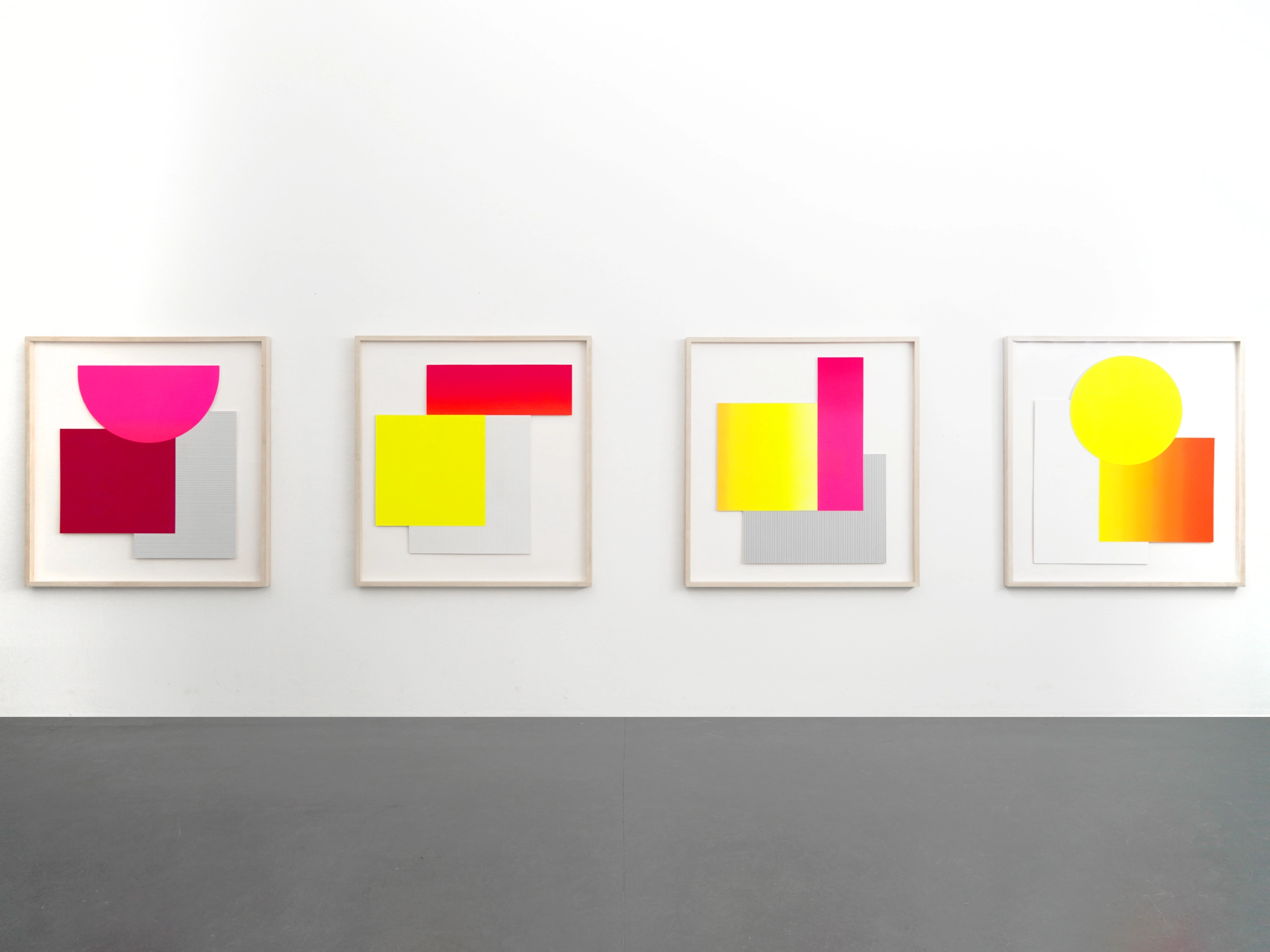
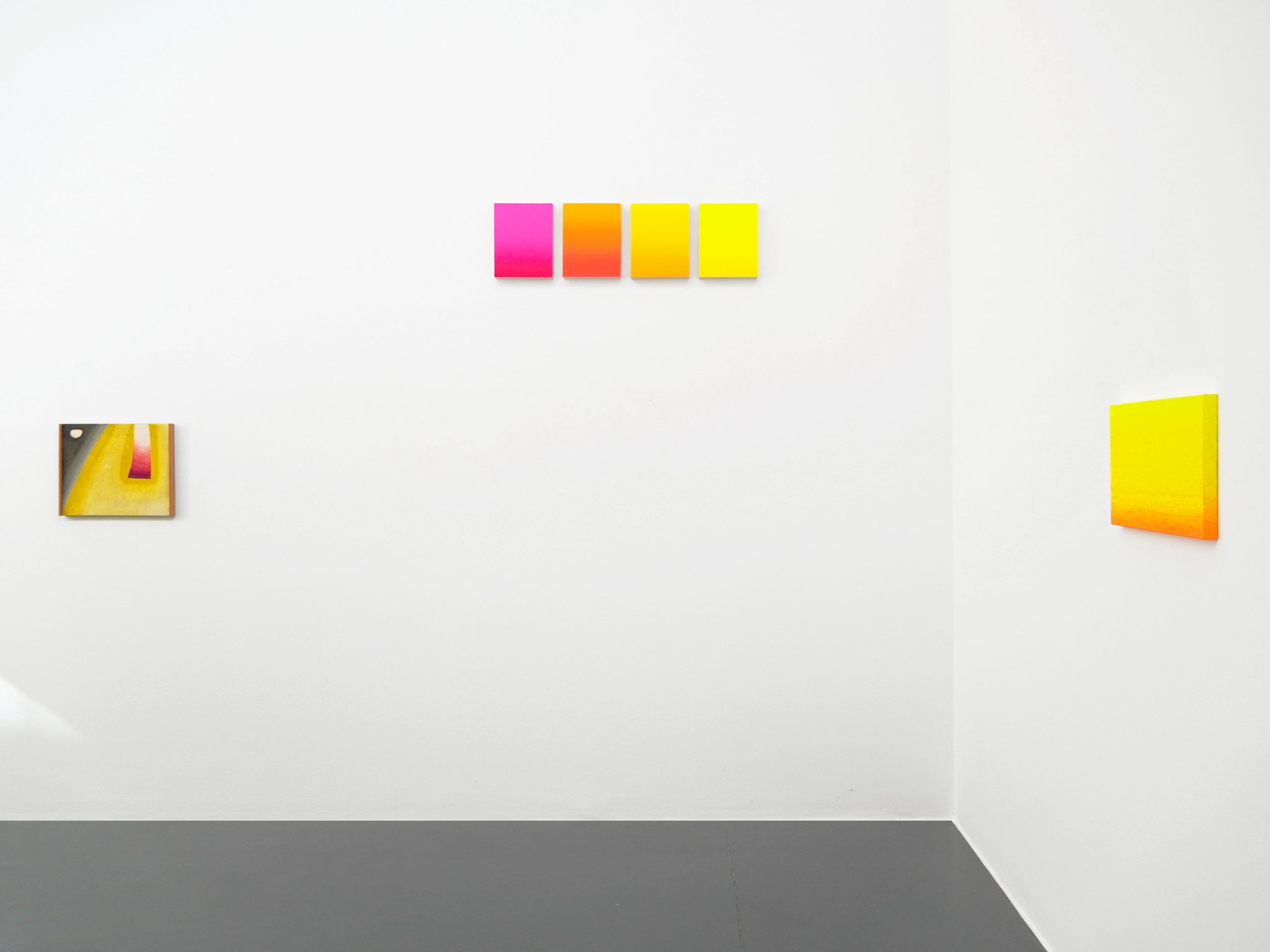
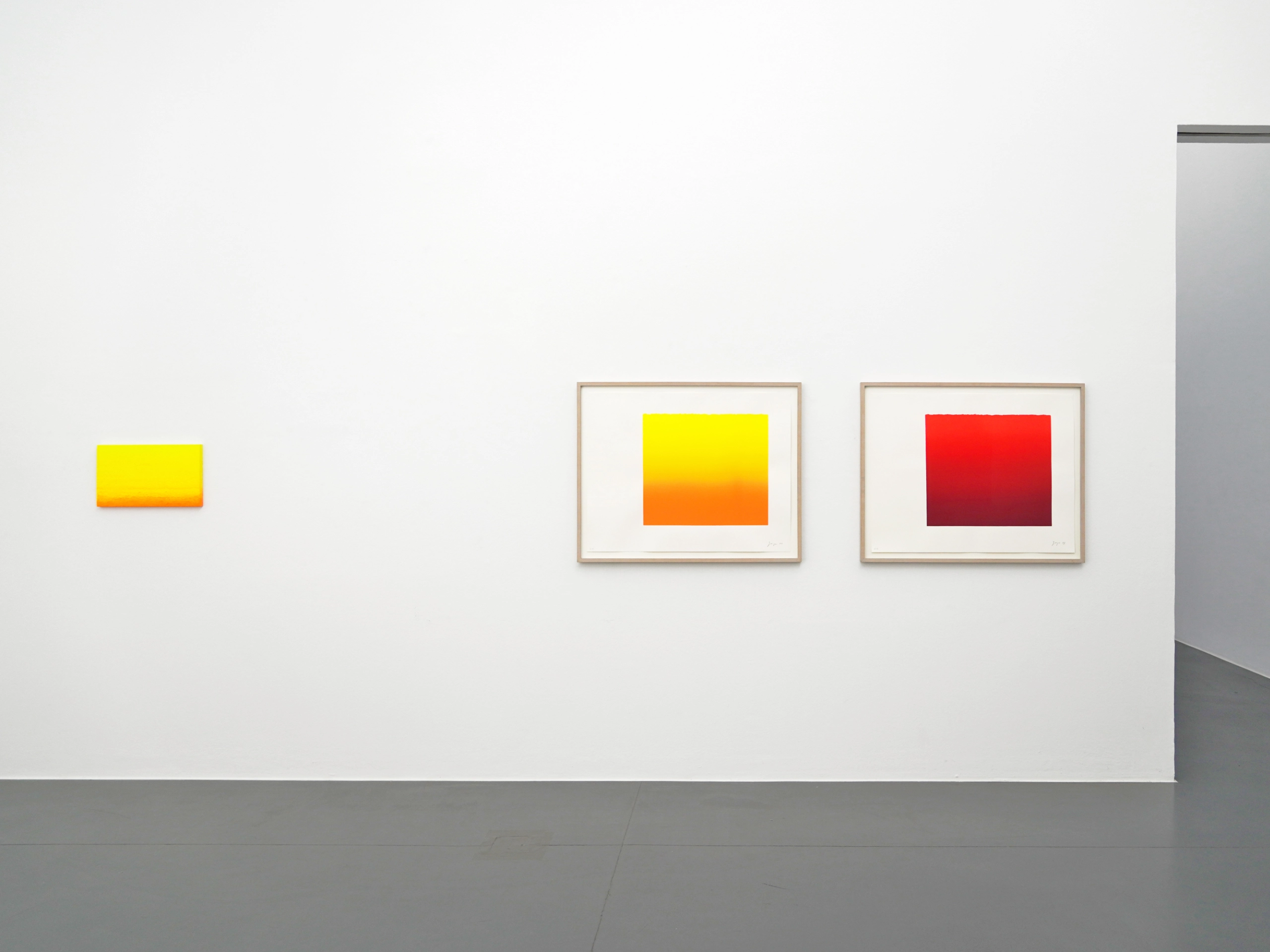
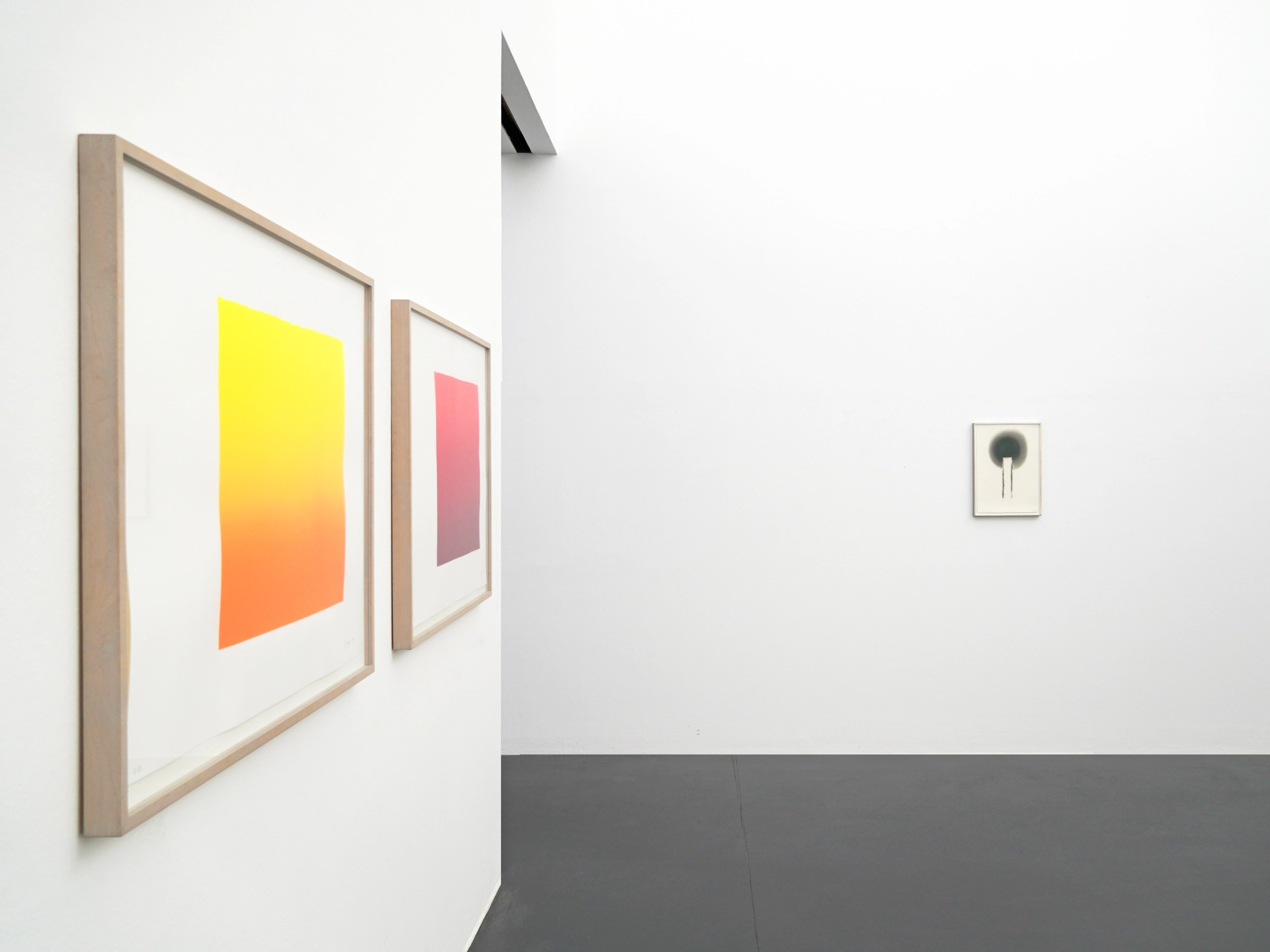
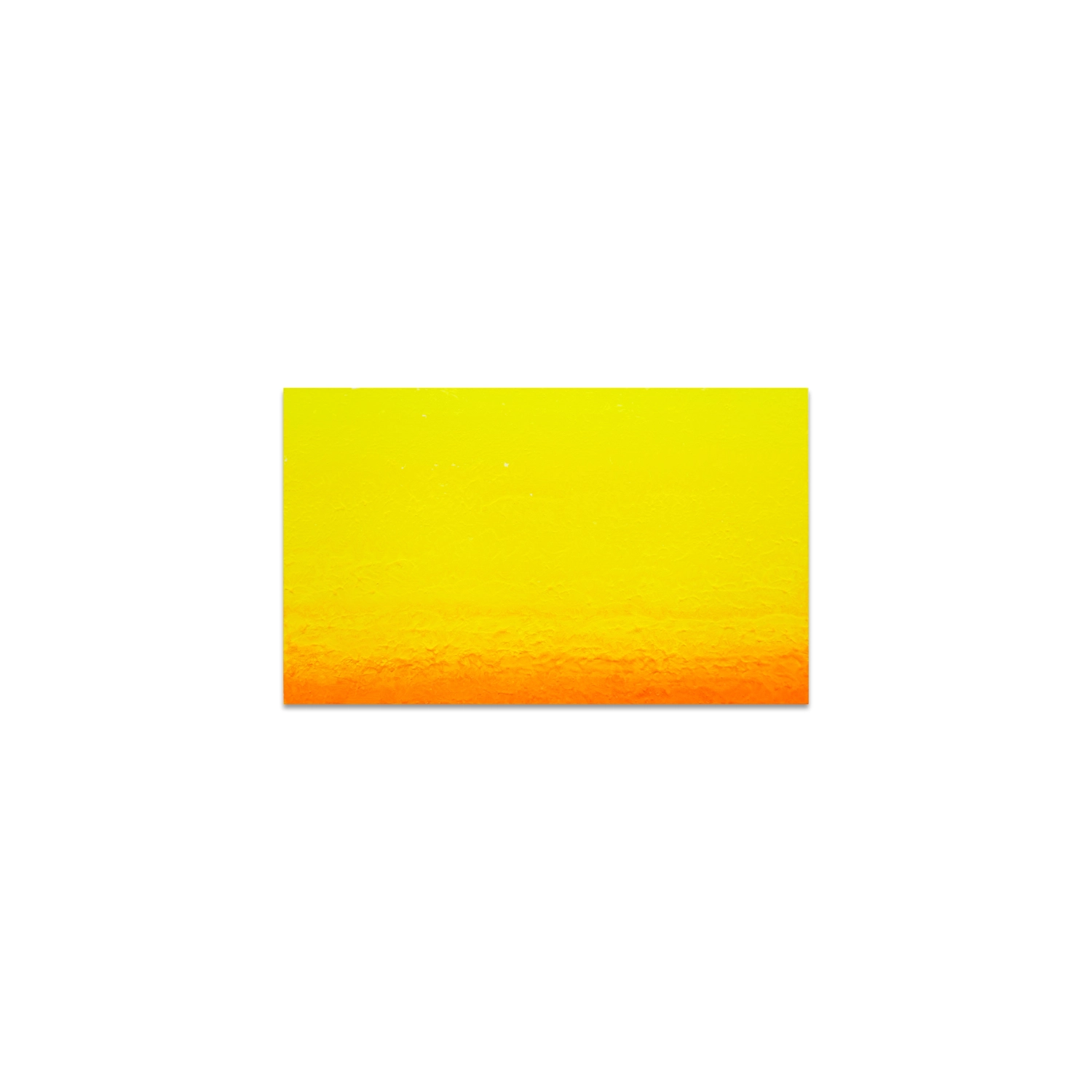
Modulation Gelb-Orange (WV 947), 2007, acrylic on wood, 30 x 50 x 3 cm
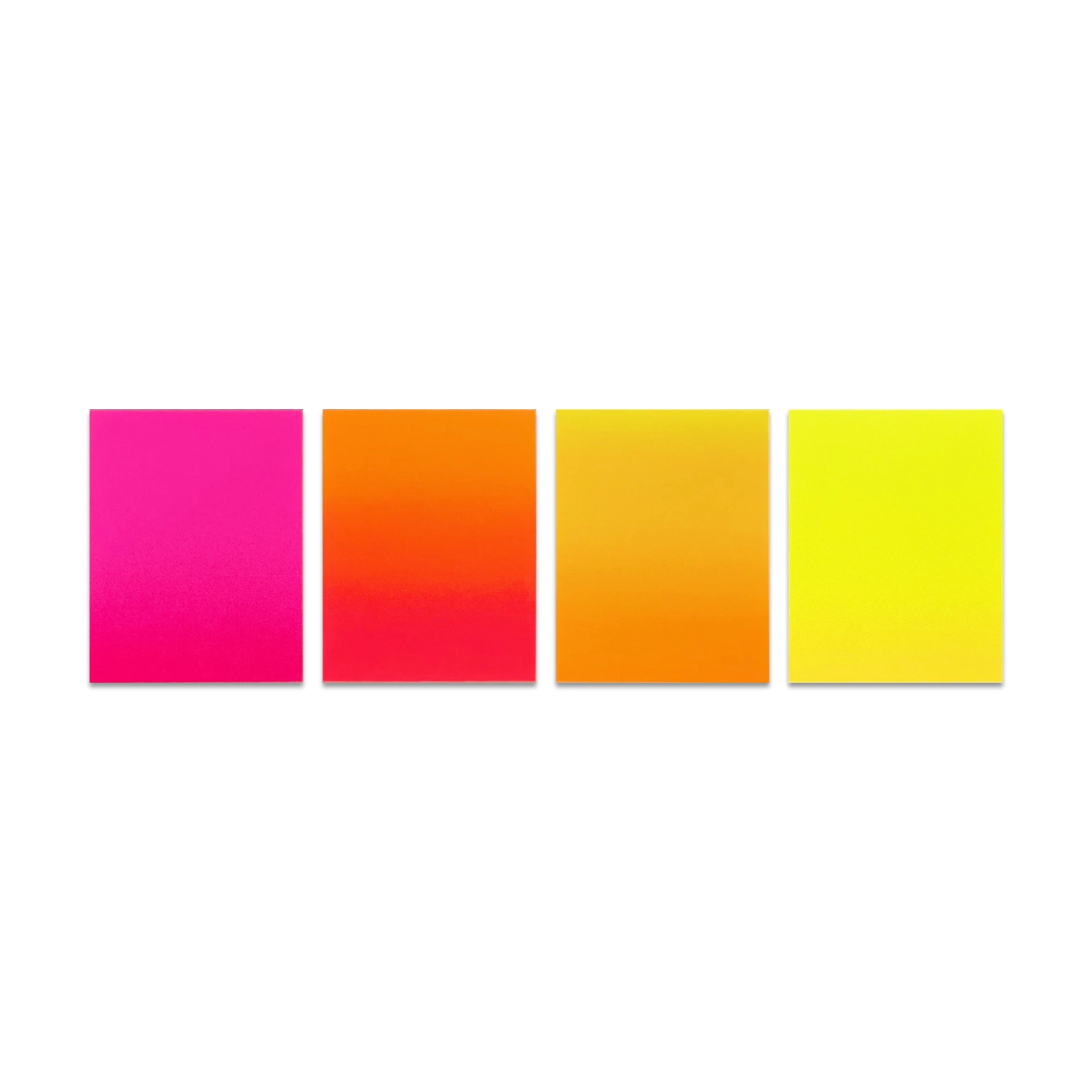
TINTORETTO, Multiples Modulationen (citron, gelb, orange, pink), 2006, Handprint with original pigments/BFK Rives, 300g collaged on wood, Ed. 3/28, signed, dated, and numbered, each 30 x 24 x 3.5 cm
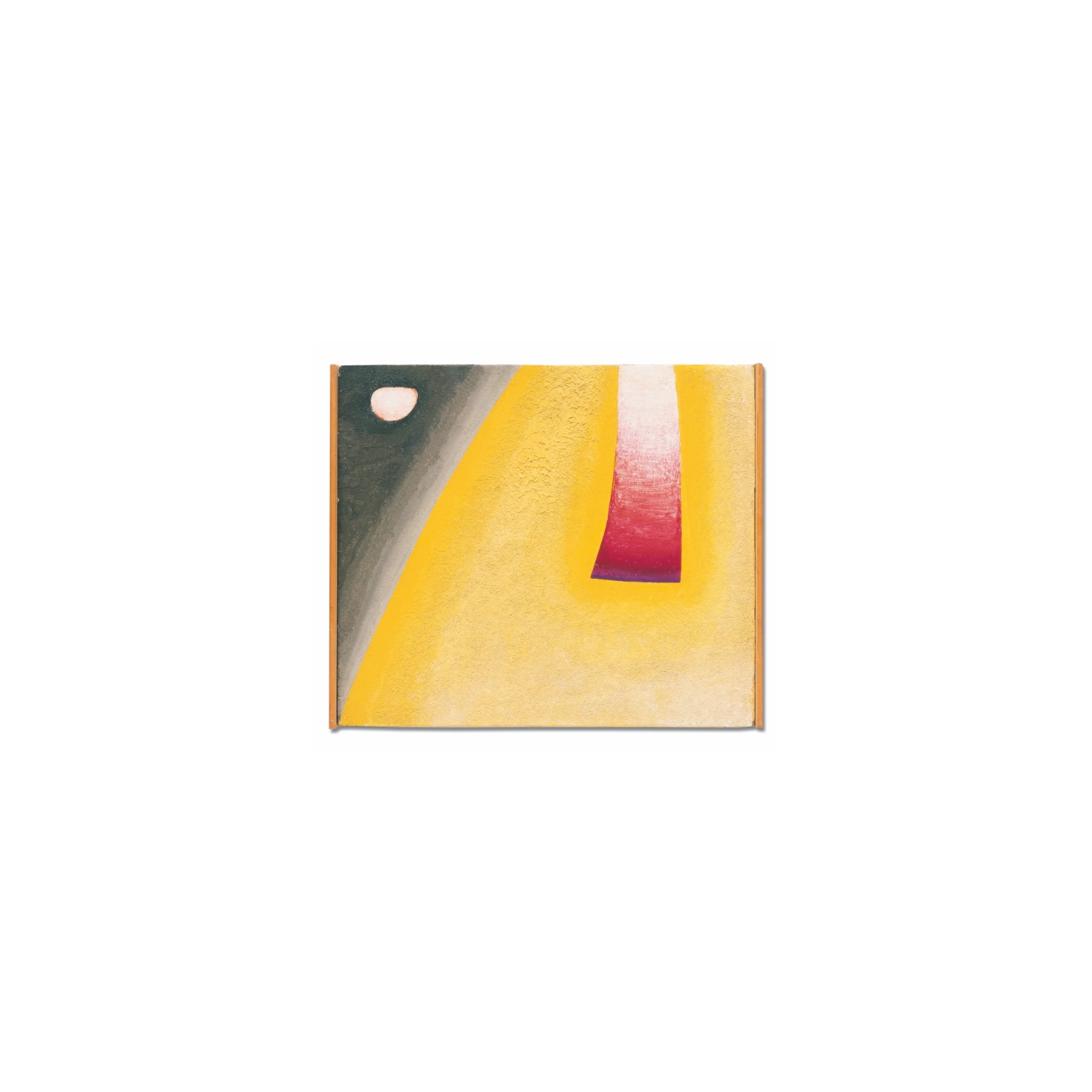
E 83 (WVG 51), 1949, Egg tempera/wood, 38 x 44 cm
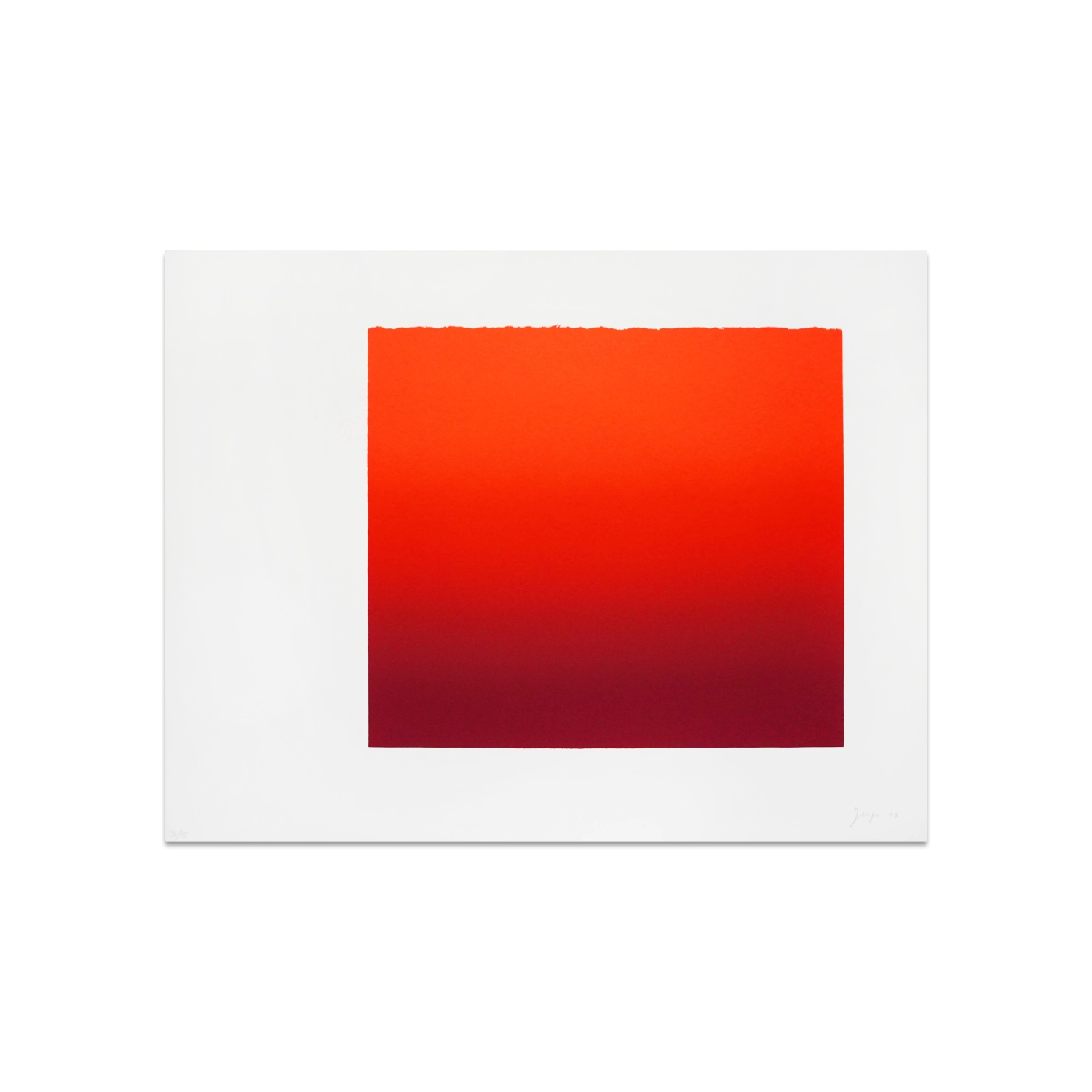
Düsseldorfer Rot/rot (WVG 218), 2003, Silkscreen print using the original pigments employed by Geiger on BKS-Rives, 300 gsm, edition of 95, signed and numbered copies, 76 x 98 cm